A set of heavy wooden doors that have opened for thousands of people as the entrance to Strutt’s North Mill reveal their surprising past as they feature as this months Our Favourite Thing from the collections of Strutt’s North Mill.
Keeping your investments and property safe is something we all value, whether it be setting up a pass code on your phone or locking your car. However, when you make an extremely large investment, such as building and operating a cotton mill, you want to be doubly sure that it is safe and secure, especially in times of social unrest. This month ‘Our Favourite Things’, the continuing exploration of the collection of Strutt’s North Mill, focuses on the main entrance door to the museum and its ingenious locking device. This is not, in fact, the door’s original location: it was only moved here in the early 1990s. But it has been part of the Belper mills since 1795.

The North Mill door: The entrance door to Strutt’s North Mill in its present position on the side of the North Mill. The door requires a good push to open but many interesting things can be found on the other side.
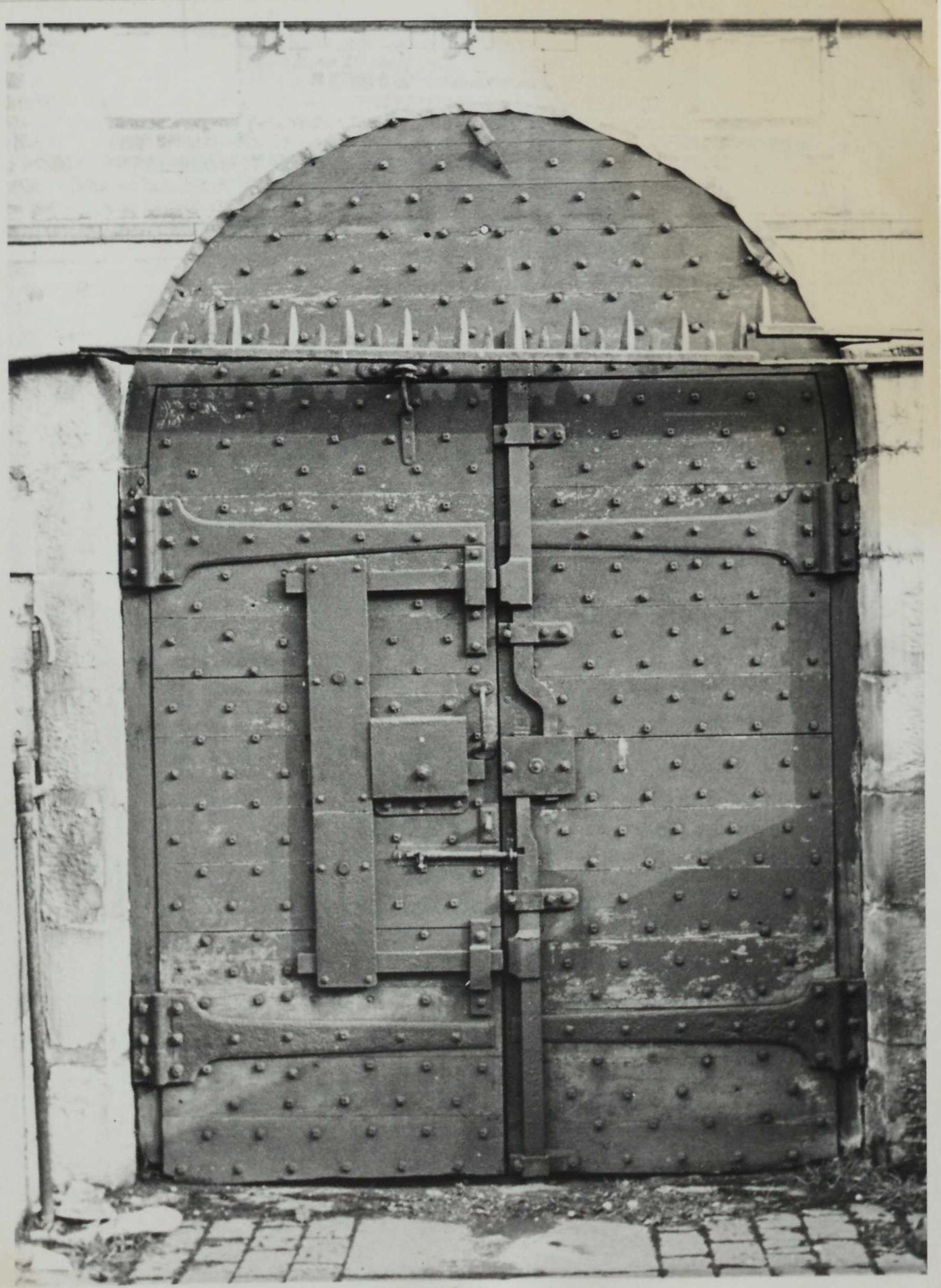
The door locking mechanism: The door in its original location showing the iron works that secures the door.
Image from the Tony Bowker Collection
The door is of double oak-planked construction, studded with iron bolts that hold the two layers of crossed planks together and provide extra strength against attack and it is secured to its frame with sturdy iron hinges. Today only the right-hand door opens but originally both doors could be opened. The front of the doors are plain with a pair of handles that double as part of the unlocking mechanism, a key hole and four iron braces that lock into the door frame when the door is closed, to provide additional strength. The back of the doors reveals a mass of ironmongery that forms the locking mechanism. Iron bars secure the doors to the frame, as well as to each other, once they are locked. This elaborate locking mechanism was designed by William Strutt.
To lock the doors, first the left-side door (looking from the outside) needs to be locked and is secured into the frame and floor by two iron bolts. Next the right-side door can be locked by closing and locking it in place with two sturdy iron bars in the left-side door. The lock on the right-side door can only be operated from the outside, so the workers were quite literally locked into the building during their shifts!
The Door Locks: A demonstration of the locking mechanism on the inside of the door opening and closing.
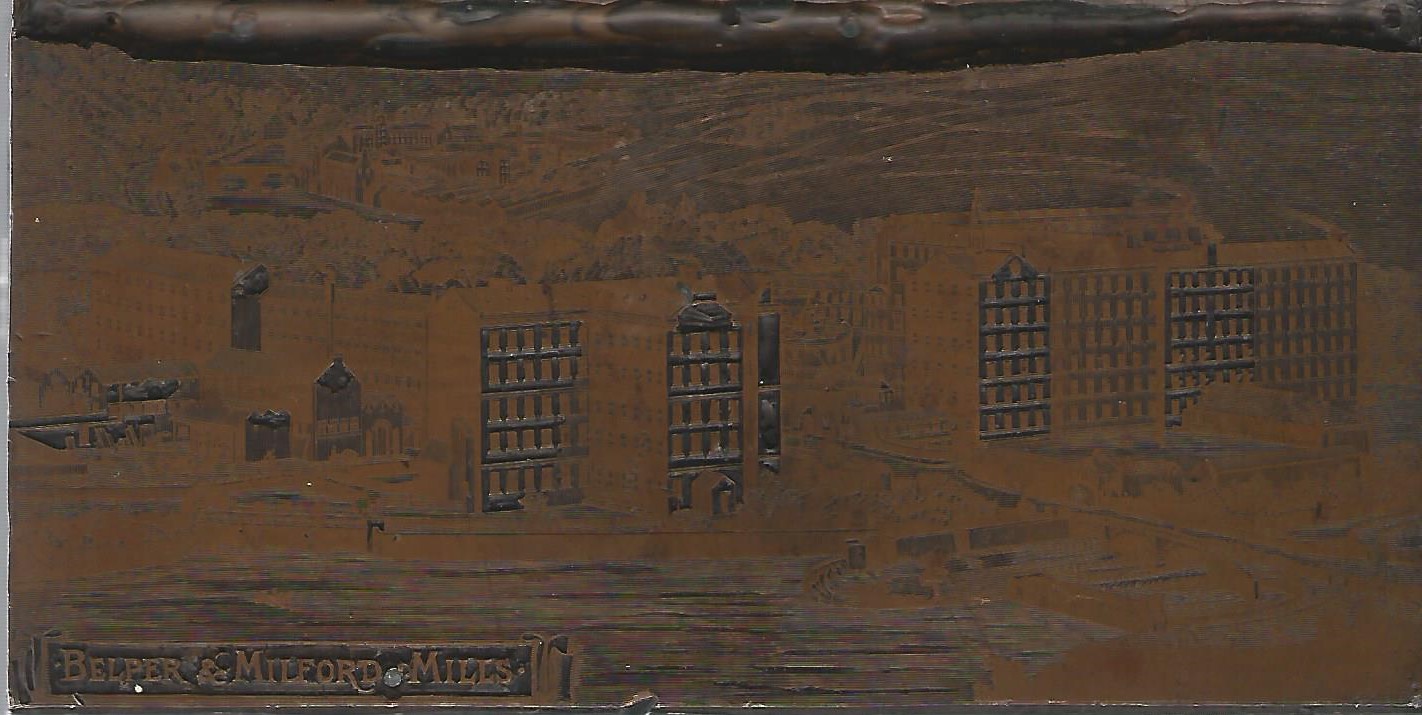
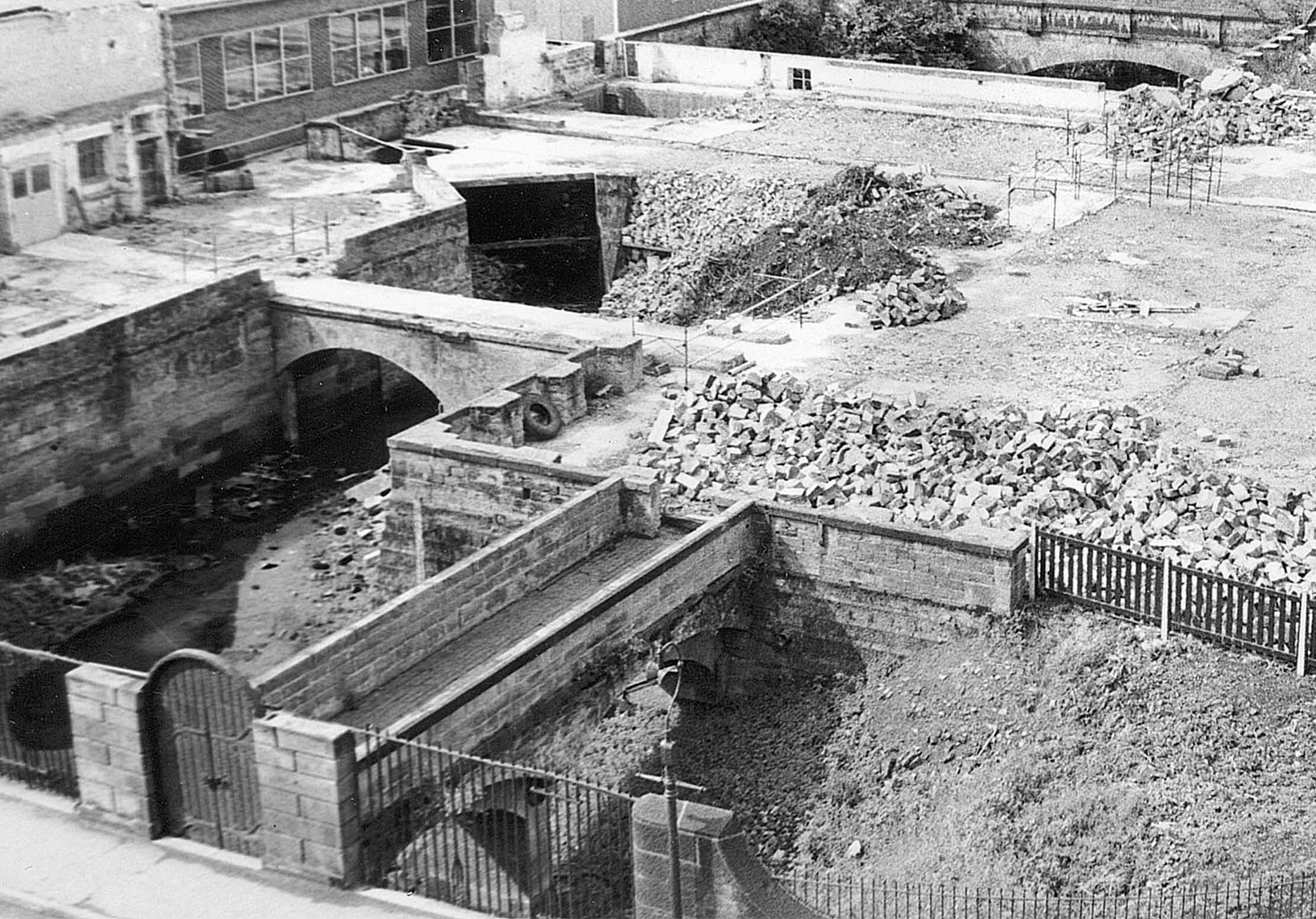
The door is older than the building to which it currently provides the entrance – the North Mill built in 1804. Originally it was one of the main entrances to the West Mill, built in 1795, and these doors stood just off Bridge Foot on the river side of the gangway that crosses the road. A covered walkway linked the doors to the West Mill, crossing the mill leat that provided water to the West Mill’s water wheels.
The reasons for the door’s solid construction are twofold. Firstly, the doors and walkway led to the counting house, where all of the money for the operation of the mills including the workers’ weekly pay were stored. Secondly the heavy door was there to protect the mill from possible attack by rioting spinners. The spinning machinery in the mill was revolutionary for the amount and consistency of spun cotton that it could produce and so was capable of putting hundreds of highly skilled hand spinners out of work. Instances of machine breaking, where organised groups of spinners would smash machines and burn down factories to drive their owners out of business, had occurred elsewhere in the country. Similar activities would go on to be known as Luddism, although today the term relates more specifically to the serious disturbances of 1811 – 1816. Along with the highly secure doors, the Strutts also incorporated other features into their mills to aid in their defence. The complex was originally surrounded by high walls or water and the gangway, which overlooks the door, also features musket embrasures to allow the local militia to defend the mill with deadly force if necessary.
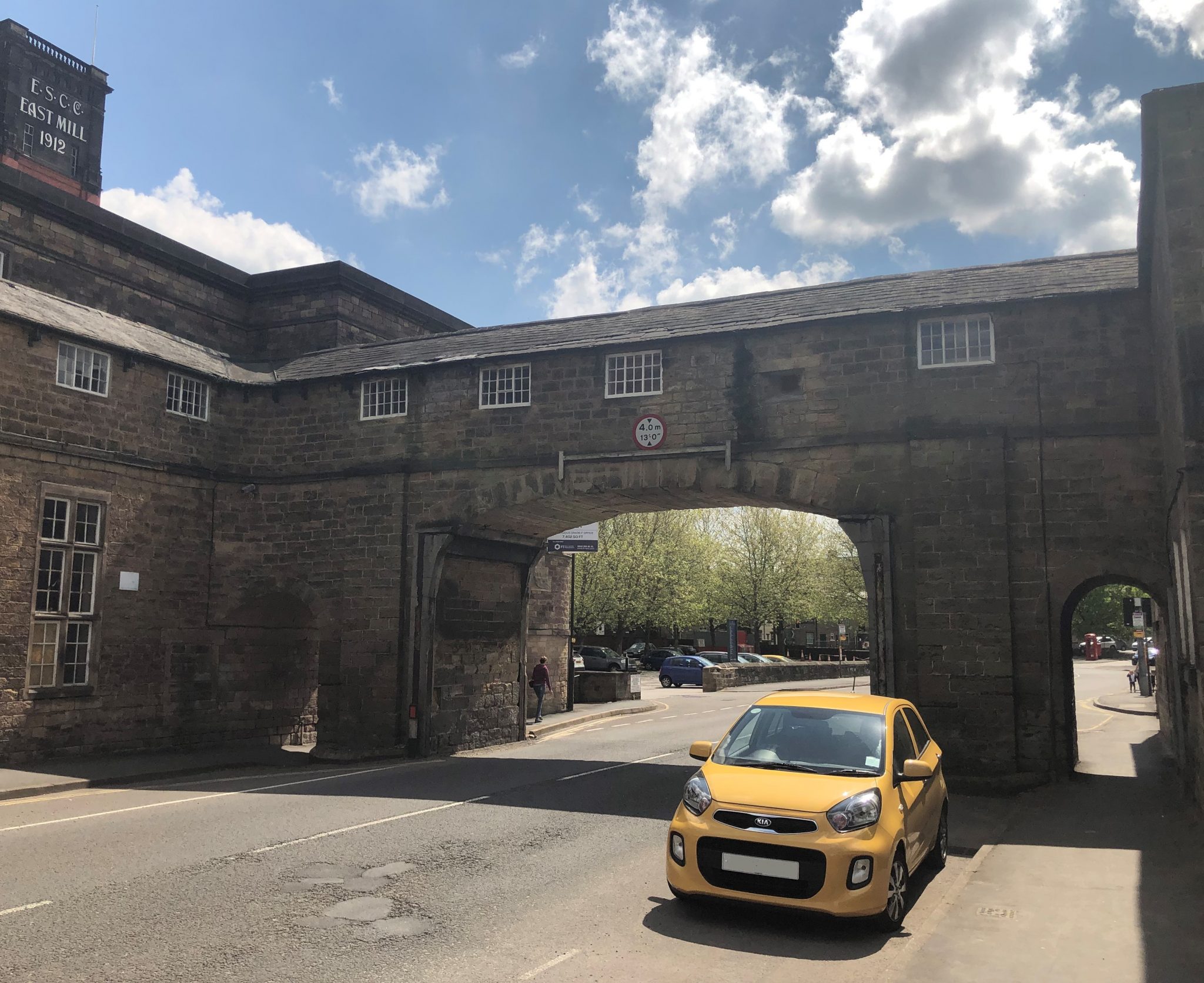
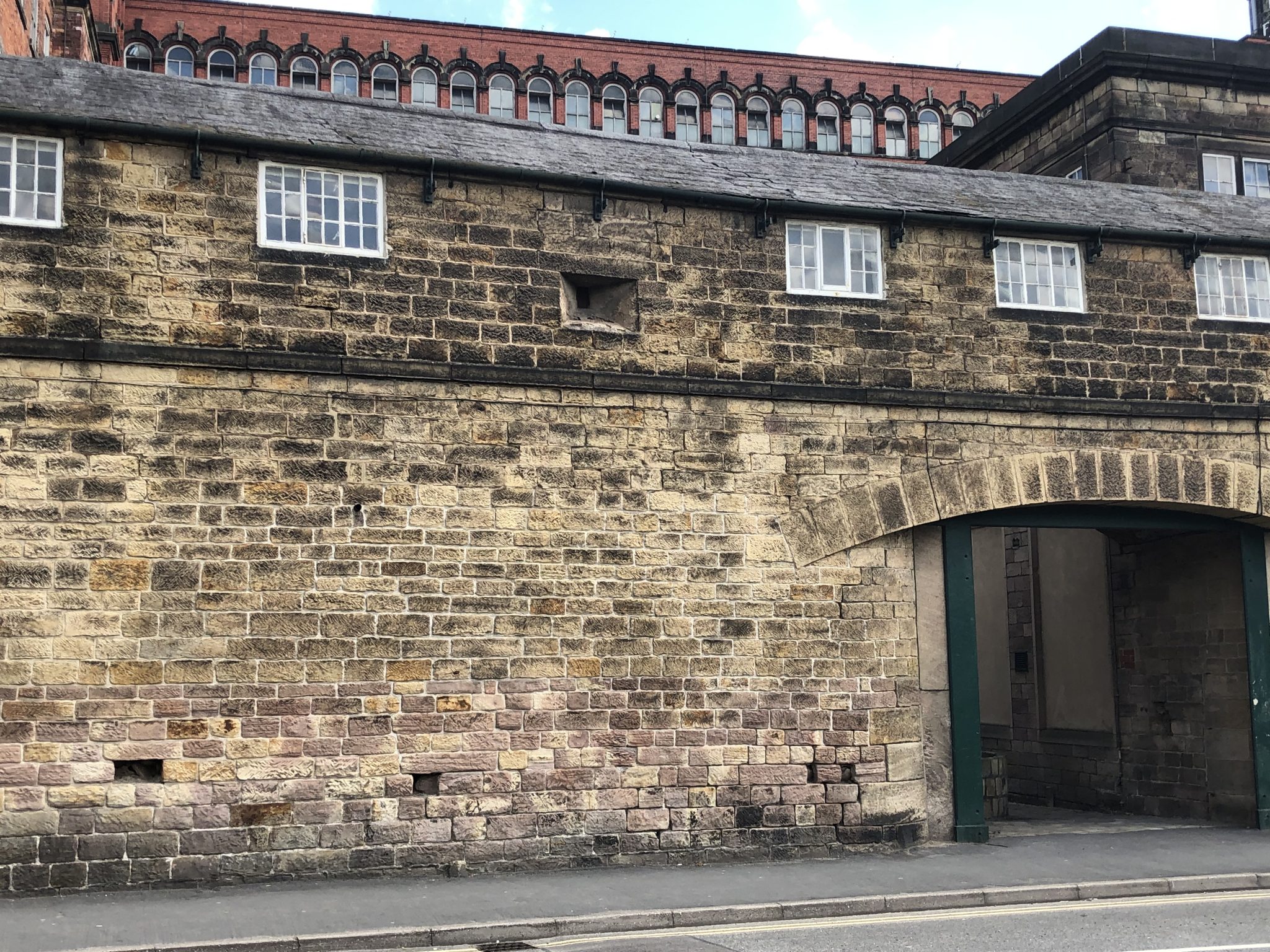
The Gangway showing musket embrasures built into it.
The musket embrasures built into the gangway covered the entrances to the Mills and are an example of just how seriously the Strutt family took the security of their Mills.
All of these enhanced security features were not however needed as the Belper mills were never attacked by machine breakers. One of the primary reasons for this was that the Strutt family were good employers who treated their employees well by the standards of the day, making them less likely to support, or resort to, machine breaking. However, the Strutt family were keen to protect their investment in their cotton mills by having the best security measures available regardless of whether they were ever required.