
This time Our Favourite Things explores where it all began for Strutt’s North Mill, a length of cotton. This material, similar in consistency to cotton wool, was one of the foundations stones of the Industrial Revolution with the creation of processes and machines that convert this material into a usable thread. This process, at its simplest teasing out fibres and twisting them together, includes many stages that require skill and precision if the finished thread is to be of consistent and high enough quality to be worth the time and effort expended in its making. It is this process that we will explore this time in Our Favourite Things as Strutt’s North Mill volunteer Gordon Dexter nominates a piece of cotton as his favourite thing.
Cotton fibres come from a plant that grows in subtropical parts of the world. There are two main types Gossypium hirsutum or Upland Cotton native to South and Central America and Gossypium arboreum, Tree Cotton native to northern India and Pakistan. After flowering, these plants protect and disperse their seeds by producing a mass of fluffy fibres and it is from these that cotton thread is produced. The earliest evidence of the use of cotton fibres dates to around 3000 BCE with evidence of cotton spinning and weaving in both the Indus Valley and South America. First arriving in Europe during the medieval period, cotton was then an expensive luxury material and most people in Britain would have worn clothing made from wool which was in plentiful supply (the economy of Northern England was based on sheep farming) and comparatively ease to spin.
Before spinning can begin cotton must first be picked and the seeds separated, a very time-consuming process until the invention of the mechanical cotton gin in 1793 that automatically removed seeds and debris. Once clean the fibres, still resembling cotton wool, need to be aligned using a process called carding. This combs the cotton until all the fibres are aligned in the same direction to produce a material similar in texture to garden fleece, but this is extremely fragile as the fibres are only held together by the limited friction between them. Next this is gathered up and can now be spun into thread. Before being twisted to lock the fibres in place it must be further stretched to get the desired thickness of thread. Finally the twist can be applied to increase the friction between the individual fibres to hold them in place and create a length of thread.
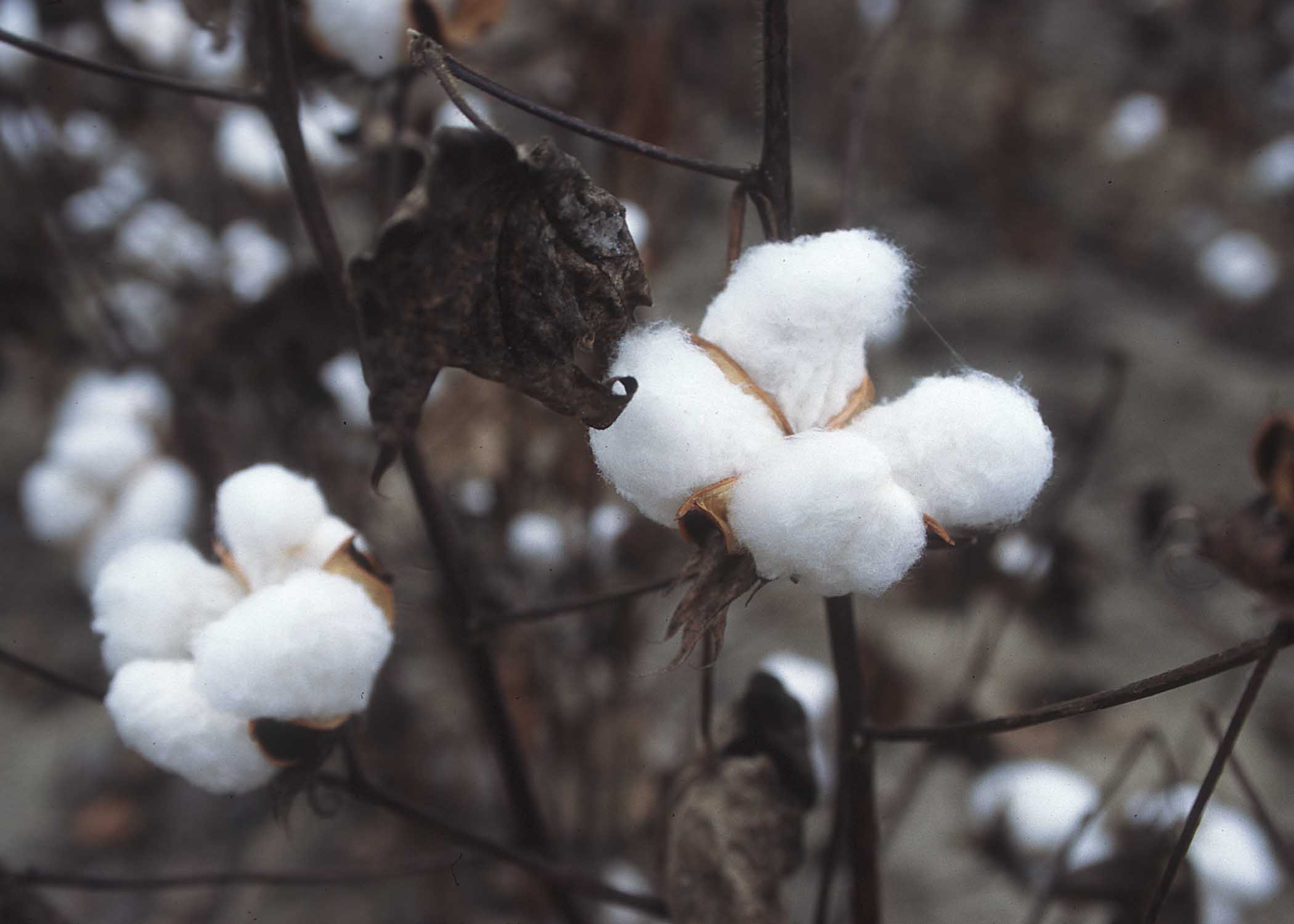
Upland Cotton

Tree Cotton
The transformation of raw cotton into a useable thread has been chosen by North Mill volunteer Gordon Dexter as his ‘favourite thing’ in the museum.
I would like to suggest a starting point – a bundle of fibres from either animal, wool or vegetable, cotton. Carding will produce a short cylinder with all the fibres aligned in one direction but hardly strong enough to handle. If the cylinder (or a longer piece of “roving”) is then extended by a steady force while twisting, a long strong and uniform thread develops, held together by the force of friction between the adjacent fibres. Perhaps not generally recognised is the natural tendency towards uniformity if a more twisted area were to develop, while the thread was being drawn out this would create an area of extra strength making it more resistant to further extension than the adjacent regions.
After a rather inept attempt to demonstrate this action to a family visiting Strutt’s North Mill, at the end of the tour of the museum the teenage daughter presented me with about 20 inches of passable thread produced by a more controlled approach of pulling and twisting a short piece of roving that she had retained from my initial demonstration.
Traditional hand spinning obviously demands great skill and experience from the ‘spinsters’ to achieve the optimum balance between twisting and pulling. (The ladies who sometimes come into the North Mill to give spinning demonstrations using the spinning wheels tell me that it takes about six months to become proficient.) As hand spinning is a much slower process than weaving, a weaver could be faced with incorporating yarn from eight or more sources into their finished product, all with their own levels of quality. Clothing was therefore expensive and valuable. Named garments were often left to relatives or servants in wills and only the very wealthy were able to follow trends in fashion. The curators of Manchester’s Costume Museum find evidence of early garments being remade into different sizes and fashions and only being discarded once they could no longer be used at all.
By contrast, once a battery of water frames or spinning mules had been installed and correctly set up it could produce vast quantities of uniform quality thread whilst being overseen by a semi-skilled “hand”. As output rose and costs fell, a world-wide demand developed. Efficient steam engines developed by James Watt supplemented or replaced water wheels, more coal was mined to feed the engines, canals and railways were built to deliver the coal and transport the finished goods to market – and the rest as they say “is history”.
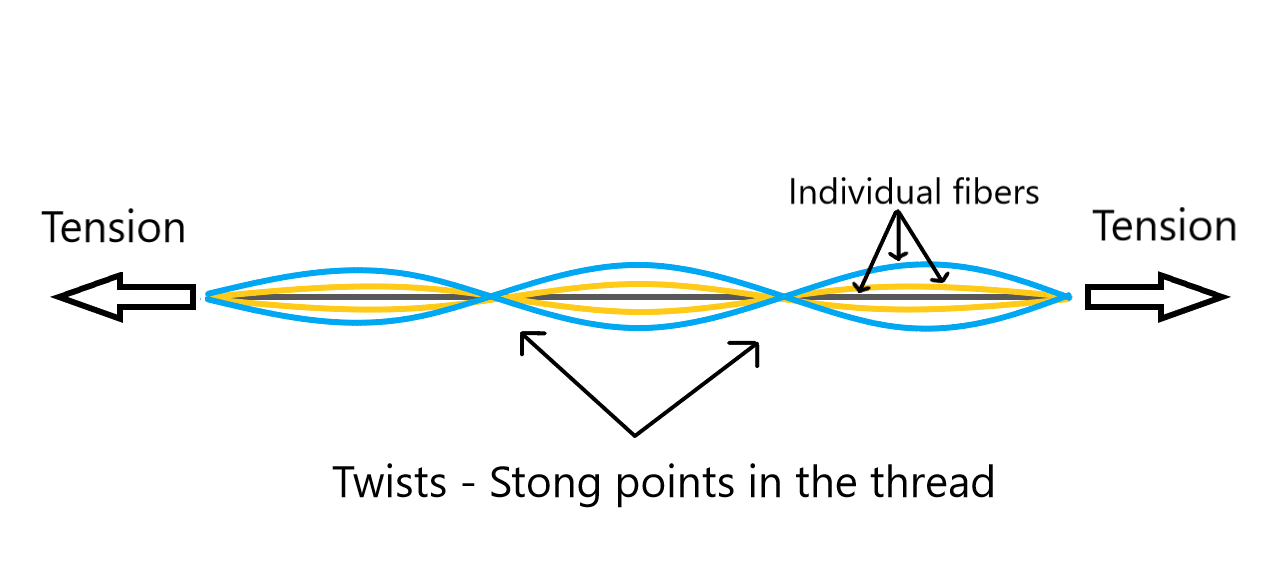
These observations by Gordon show just how crucial it is to get the conditions correct for spinning cotton and how time-consuming a process it can be to get just a small amount of thread. The bottleneck in the production of spun thread limited the availability of textiles to most people, due to high prices. The mass availability of spun thread created by the spinning mule allowed the proliferation of other inventions such as power looms and knitting machines leading to an explosion in textile production alongside further development in transportation and other industries that were related to textile production.